At a 'Tea Party' With Scientists, This Ape Showed Some Imagination [View all]
By Alexa Robles-Gil NYT News Service/Syndicate Stories
Updated February 9, 2026 5:35 PM
(Science Times) Having an imaginary friend, playing house or daydreaming about the future were long considered uniquely human abilities. Now, scientists have conducted the first study indicating that apes have the ability to play pretend as well.
The findings, published Thursday in the journal Science, suggest that imagination is within the cognitive potential of an ape and can possibly be traced back to our common evolutionary ancestors.
"This is one of those things that we assume is distinct about our species," said Christopher Krupenye, a cognitive scientist at Johns Hopkins University and an author of the study.
"This kind of finding really shows us that there's much more richness to these animals' minds than people give them credit for," he said.
Researchers knew that apes were capable of certain kinds of imagination. If an ape watches someone hide food in a cup, it can imagine that the food is there despite not seeing it. Because that perception is the reality -- the food is actually there -- it requires the ape to sustain only one view of the world, the one that it knows to be true.
Read more at: https://www.heraldonline.com/news/nation-world/national/article314597903.html#storylink=cpy
~ ~ ~
March 20, 2025
3 min read
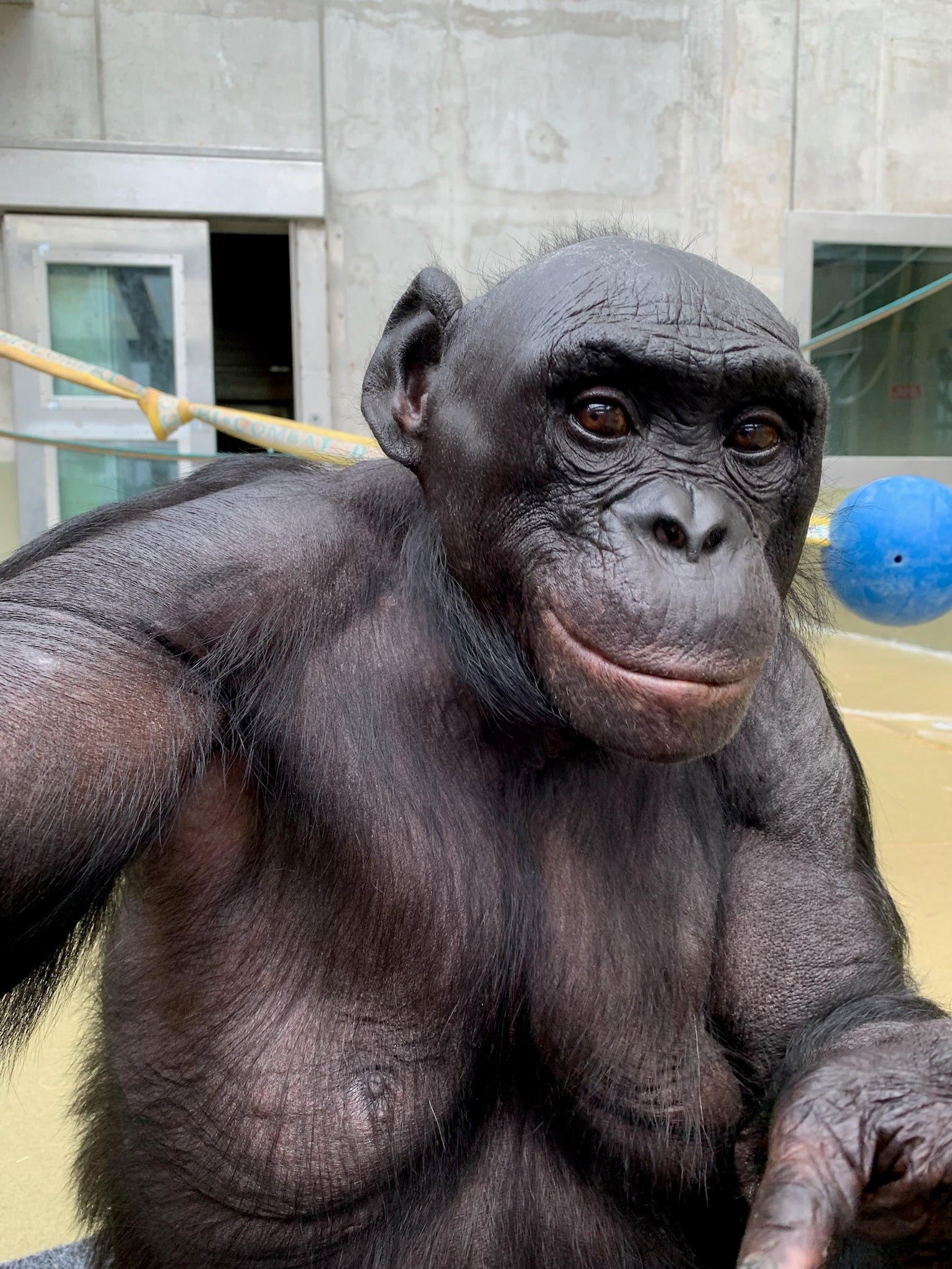
Kanzi the Bonobo, Who Learned Language and Made Stone Tools, Dies at Age 44
What we learned about ape and human cognition from Kanzi the bonobo, who died this week
By Kate Wong edited by Jeanna Bryner
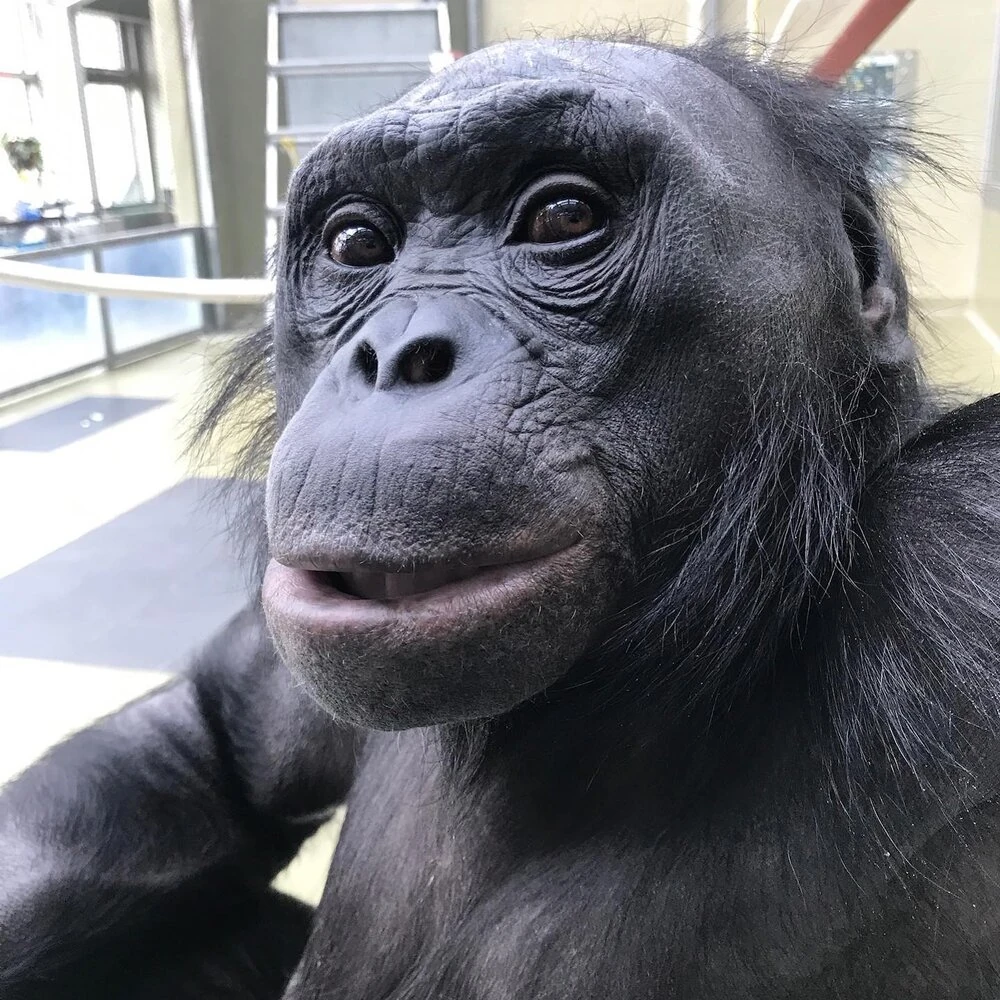
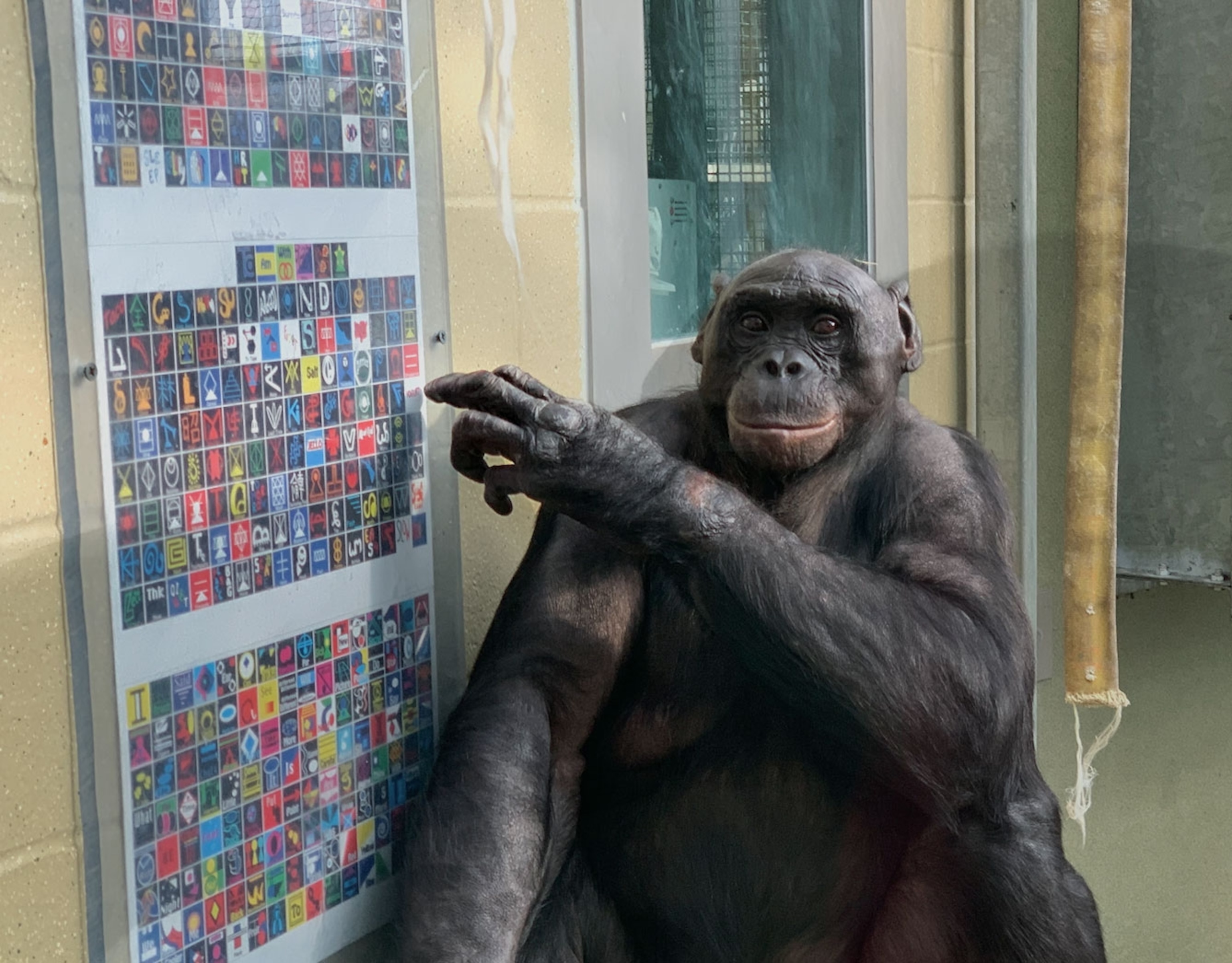
Kanzi the bonobo, who learned how to communicate with humans using symbols, has died at the age of 44. Raised and kept in captivity, Kanzi was the subject of many studies aimed at illuminating ape cognition and the origins of human language and tool use.
Why It Matters
Kanzi was not the first great ape to learn how to communicate with humans using symbols. Koko the gorilla and Washoe the chimpanzee learned signs that were adapted from American Sign Language. But unlike his predecessors, who acquired their skills through direct training from researchers, Kanzi developed an interest in such symbols on his own when his adoptive mother, Matata, was receiving lessons on how to use keyboard lexigrams to communicate. Kanzi went on to learn hundreds of symbols that represented various objects and activities, as well as some more abstract concepts. Sometimes he combined these symbols to create new meaning.
Kanzi was also something of a technologist. Archaeologists Nicholas Toth and Kathy Schick, both at Indiana University, began working with Kanzi in 1990 to teach him and his sister Panbanisha how to make stone tools by using one rock as a hammerstone to remove sharp flakes from another rock called a core. “Kanzi slowly got more adept at flaking stone through time,” Toth recalls. Early in Kanzi’s training, he invented his own technique for making stone tools, throwing a flint cobble against a hard tile floor to remove larger flakes. He would then use the flakes to cut a cord to open a box with a food treat inside. After developing this technique, Toth says, Kanzi “seemed to realize that the force of impact was important in getting larger usable flakes” and applied this newfound knowledge when he resumed using the hammerstone-and-core technique to make tools.
More:
https://www.scientificamerican.com/article/kanzi-the-bonobo-who-learned-language-and-made-stone-tools-dies-at-age-44/
~ ~ ~
Kanzi, Wikipedia:
https://en.wikipedia.org/wiki/Kanzi

 = new reply since forum marked as read