Environment & Energy
Related: About this forumIt's Almost Impossible for Tristan Gooley to Get Lost. That's One Reason He Has Millions of Followers
The British adventurer has crossed the Atlantic solo in a plane and a boat. Now he reads tree leaves, puddles and moss to get his bearings
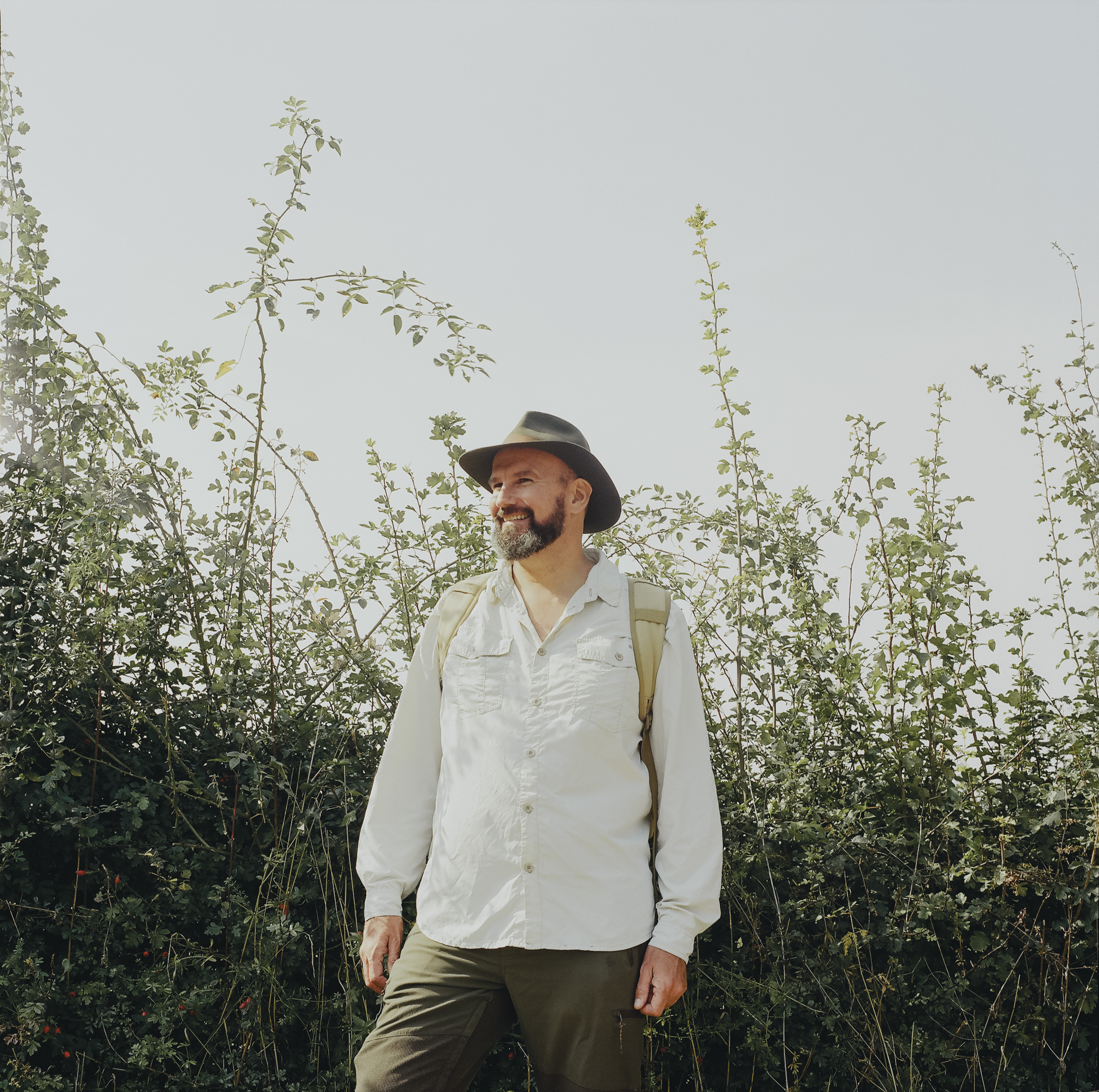
Tristian Gooley
Navigating based on natural signs, writes Tristan Gooley, “sharpens our powers of observation, deduction and prediction.”
Lydia Goldblatt
By Richard Grant
Photographs by Lydia Goldblatt
November 2025
I’m standing at an intersection of footpaths in the woods of West Sussex, England, feeling a little uncertain of my bearings. Which one of these five paths leads back to the Land Rover, parked (I think) roughly north of here? The summer sun is high and obscured by clouds, so not much help. The wind, which has been blowing intermittently from the northeast all day, providing a reliable navigation guide, has now died away completely. And I have no phone, compass or GPS.
Standing next to me is Tristan Gooley, the “Sherlock Holmes of Nature,” as he’s nicknamed in the British media, so I’m in no danger of actually getting lost. This tall, affable, bearded Englishman, 52 years old and wearing a canvas bush hat, is one of the most skilled navigators on the planet. He’s a master yachtsman and pilot who has risked his life on long solo adventures, using conventional navigation instruments, but his greatest expertise is in “natural navigation”—the ancient, mostly lost art of finding direction by reading the signs and clues in nature. He has studied the directional techniques of the Tuareg, Bedouin, Dayak and other Indigenous peoples around the earth. He’s tested Viking seafaring methods in a small boat in the North Atlantic and has written a series of award-winning and internationally best-selling books about natural navigation, weather, water and more. His latest, out this fall, is The Hidden Seasons: A Calendar of Nature’s Clues.
Gooley
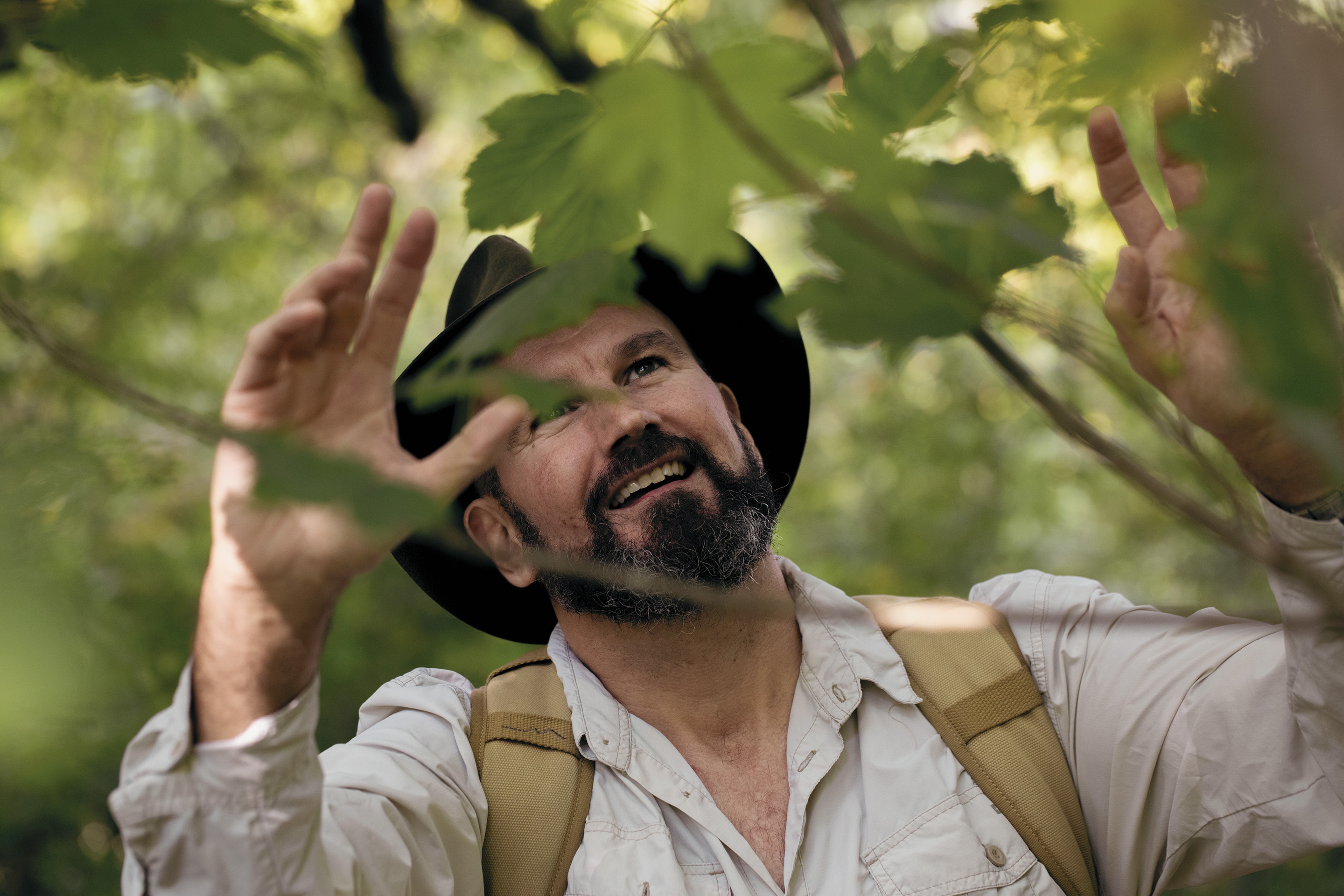
During a teaching walk, Gooley notes that some of the sycamore maple leaves carry tar spot fungus, indicating fresh air—a hint that you’re not likely to be downwind of a city or industrial hub. Lydia Goldblatt
Observing my uncertainty at the intersection, Gooley invites me to look more closely at the trees. An isolated broadleaf tree, he says, will nearly always have more branches and leaves on its south side. “Trees are in the light-harvesting business, and sunlight comes from the south in the Northern Hemisphere,” he explains. Sure enough, looking at a birch tree in a clearing, I can see that one side, presumably the southern, has more growth than the other sides.
Then he draws my attention to another clue on the same tree. “South-facing branches grow directly toward the sunlight,” he says. “The branches on the north side can’t do that, because the rest of the tree is in the way. So they grow more vertically to harvest the light above them.”
More:
https://www.smithsonianmag.com/science-nature/almost-impossible-tristan-gooley-get-lost-one-reason-millions-followers-180987461/
 = new reply since forum marked as read
Highlight:
NoneDon't highlight anything
5 newestHighlight 5 most recent replies
= new reply since forum marked as read
Highlight:
NoneDon't highlight anything
5 newestHighlight 5 most recent replies

Easterncedar
(5,337 posts)Thanks, Judi Lynn. It was a cheerful story to read in the middle of the night.

Judi Lynn
(164,027 posts)point up because their view of the sun is blocked by the centers of the trees! Good grief!
To think I lived so long to have never heard about this until tonight! I could have missed it altogether!



Thanks for taking the time, Eastern Cedar. 